
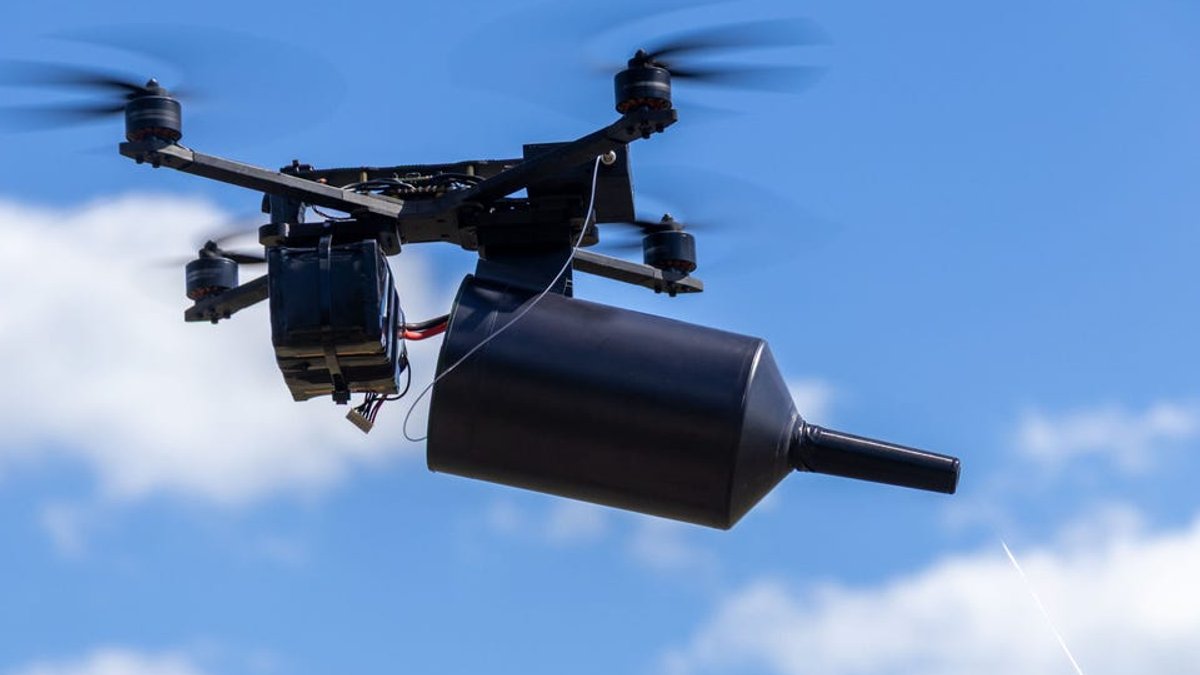
Ukrainian companies are building fiber-optic drones that can fly farther than ever before. These drones are not blocked by enemy electronic jamming. They use a physical cable to send commands and video. One major maker, TechEx, is now questioning if pushing the range even further is a good idea.
TechEx builds drones with ranges of up to 35 and 40 kilometers. The company is considering if it needs to make versions that fly 45 or 50 kilometers. Oleg, a TechEx executive, explained why they are unsure. “We are currently considering whether it’s still necessary to do the next versions of the fiber optic drones to fly, let’s say, 45 or 50 kilometers,” he said.
Flying farther requires a heavier spool of cable. It also needs a larger battery to lift the extra weight. This can reduce the amount of equipment a drone can carry. “This may affect the amount of the payloads carried by the drone,” Oleg said. The company is still trying to decide if soldiers will actually need such long-range drones on the front lines. Some Ukrainian drone makers have also noted that shorter ranges are often more effective because longer distances increase the risk of the cable breaking during flight.
Read Also: Villa Vie cruise ship suspends operations abruptly
Balancing Drone Weight
All drone makers must balance the weight of cameras, explosives, and communication gear. This is a harder problem for fiber-optic drones because they also carry a spool. The cable’s weight limits the payload, as noted by Ukraine’s innovation platform Brave1. It said the “fiber-optic drones have some limitations, including the need to carry a coil of cable.” Since the coil itself has some weight, this can limit the payload of the UAV, Brave1 explained, referring to uncrewed aerial vehicles.
TechEx has found some solutions. It has developed technology to make the spool lighter. This involves “tiny tweaks and changes” to how the spool is made and how the fiber is wound onto it. Ukraine’s Ministry of Defense praised the company’s work. It said TechEx has a “record-low spool weight among Ukrainian fiber-optic drones.” This lets the drones carry heavy loads while keeping other fiber-optic benefits. Olha, a TechEx representative, said this mitigation of the cable weight limitation allows the drones to achieve high payloads.
Not every company agrees on the best trade-off between weight and range. This diversity could be an advantage for Ukraine’s military. Different units use various drones for different missions. Some missions need long range with a small payload. Others need more firepower over a shorter distance. Soldiers value the ability to choose the right tool for each job. Attack missions aren’t the only ones where explosive weight is a factor; soldiers have described using fiber-optic drones for intelligence gathering with onboard cameras, though there can be a trade-off with higher-quality cameras weighing more.
Read Also: Tech Giants Project $800 Billion AI Spending 2026
Diverse Drone Arsenal
Ukraine’s drone arsenal includes many types. There are long-range strike drones, mid-range drones, and even heavy bombers. Each system has its own strengths and weaknesses. Manufacturers and soldiers must decide which capabilities are most important for a specific task. Many of these larger systems are able to carry much heavier payloads than small FPV drones.
TechEx gets constant feedback from the units that use its drones. It has a technical support department that works with more than 100 units. This feedback leads to weekly changes in their products. It can even lead to a complete rethink of a design. The company’s Striker interceptor drone is a good example. The original prototype was much bigger. Testing and feedback showed it needed to be smaller and more agile and didn’t need such a large payload. “We were able to completely redesign, and let’s say eventually it looked nothing like the initial prototype,” Olha said.
Developing new weapons of war is a constant process of reevaluating, rethinking, and evolving.


